

























Understanding the evolution of service dogs

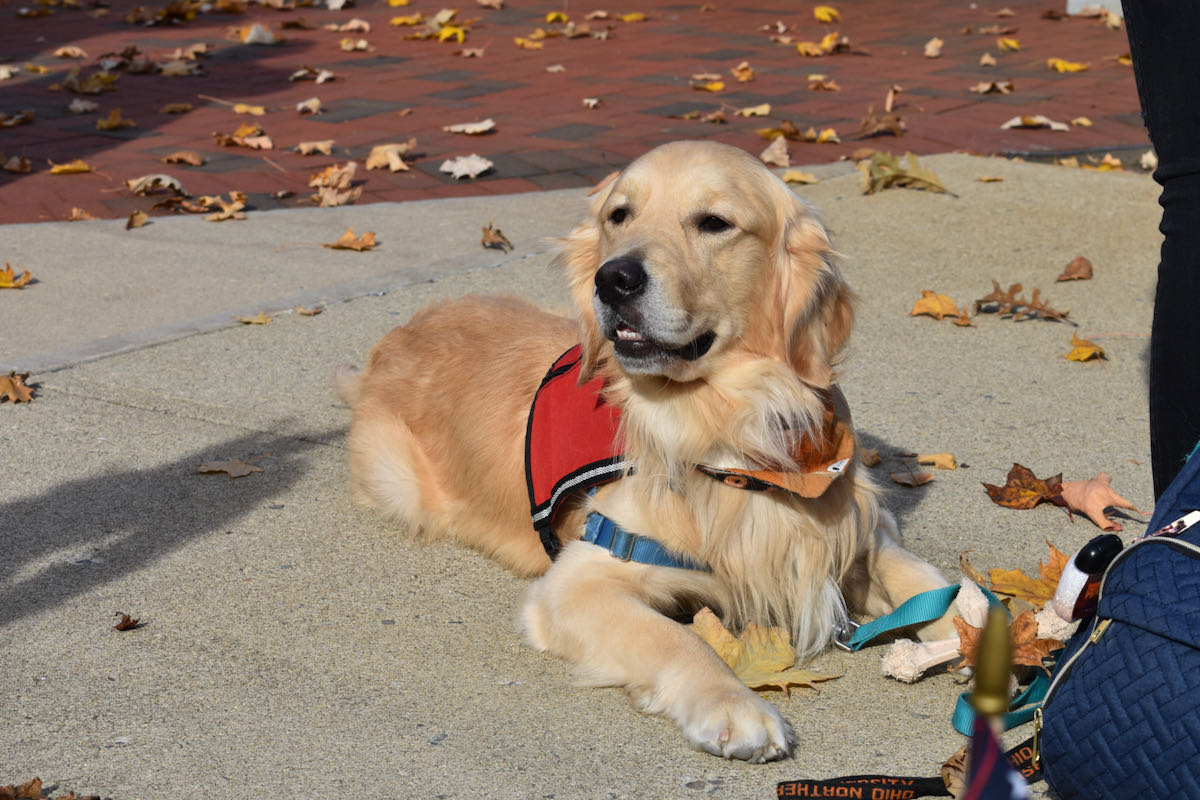
Institute for Civics and Public Policy (ICAPP) at Ohio Northern University fellows Kennedy Aikey and Hailey Trimpey recently examined the growing use of service dogs in society. Trimpey is a student volunteer who works to train service dogs at Ohio Northern. It is not uncommon to find many students who are serving as trainers on ONU’s campus. The student authors find that the development of new skills and training has allowed for these four-legged friends to become a lifeline for many more people in need.
Both volunteer and paid members of communities all over the world are doing their part to ensure those in need can receive help through a service dog. These four-legged companions allow for a level of independence many never thought possible. There are many benefits to such a program, which is why it is so important to keep it alive and to continue meeting the demand for service dogs worldwide. These programs also have a great impact on the trainers. Trimpey mentions that, “These dogs really do become a part of your family while training them. It’s a tough and often emotional process, but I just try to keep in mind that their success means helping a family in need and finding their forever home.”
In their research, Aikey and Trimpey discover the initial use of dogs as aides. It has taken centuries for the definition of service dog abilities to evolve into what it is today. The authors noted that it wasn’t until 1990 when “the Americans with Disabilities Act was passed in which service dogs were legally recognized in the United States.” The Act led to a great expansion in their use.
Since then, several organizations have developed to keep up with the demand for service dogs. One specific organization the student authors mention is 4 Paws for Ability out of Xenia, Ohio. They note that “4 Paws trains dogs for all sorts of responsibilities and is known for working with families that have unique needs.”
4 Paws for Ability has allowed for many universities, including Ohio Northern, to participate in training service dogs. Students act as volunteer trainers and are responsible for socializing the young dogs as well as teaching them basic commands. The university program is the first step in the SDiT’s career. The authors mention that “the dogs eventually leave this program to begin advanced training in hopes to be paired with their forever family.”
The full Critical Question #12 can be found HERE and a podcast version, as well as other installments, can be found HERE.
The Institute for Civics and Public Policy (ICAPP) at Ohio Northern University is a non-partisan, education-based community of scholars dedicated to conducting high-quality research to support civic literacy and an informed understanding of public policies with a focus on those issues affecting citizens in the Industrial Midwest.