























Look skyward at night this weekend

If you watch the nighttime sky, this weekend will be worthwhile. Click here for more details from NASA Jet Propulsion Lab (JPL).
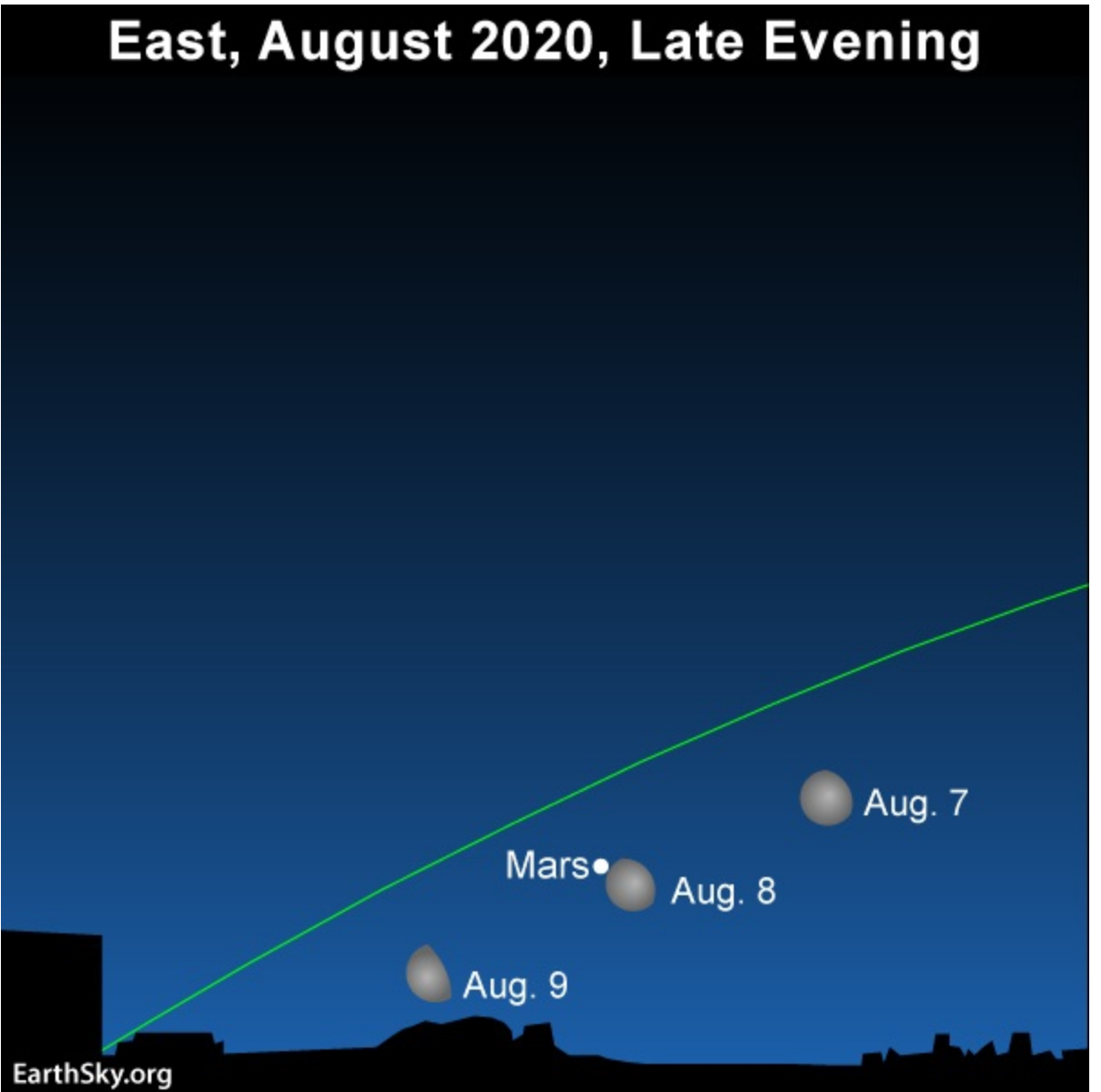
Saturday, Aug. 8: Moon, Mars and the “Great Andromeda Galaxy”
A week after passing close to the bigger outer planets, our satellite will pass close to the “red planet.” Try to catch the Mars-rise around midnight in the east (so, early on Saturday) and then look above to the northeast and you’ll be in the zone for the Andromeda Galaxy (M31). Scan with binoculars about halfway between the W-shaped five-star constellation of Cassiopeia and Mars/the Moon and you’ll see a fuzzy patch of ... one trillion stars.
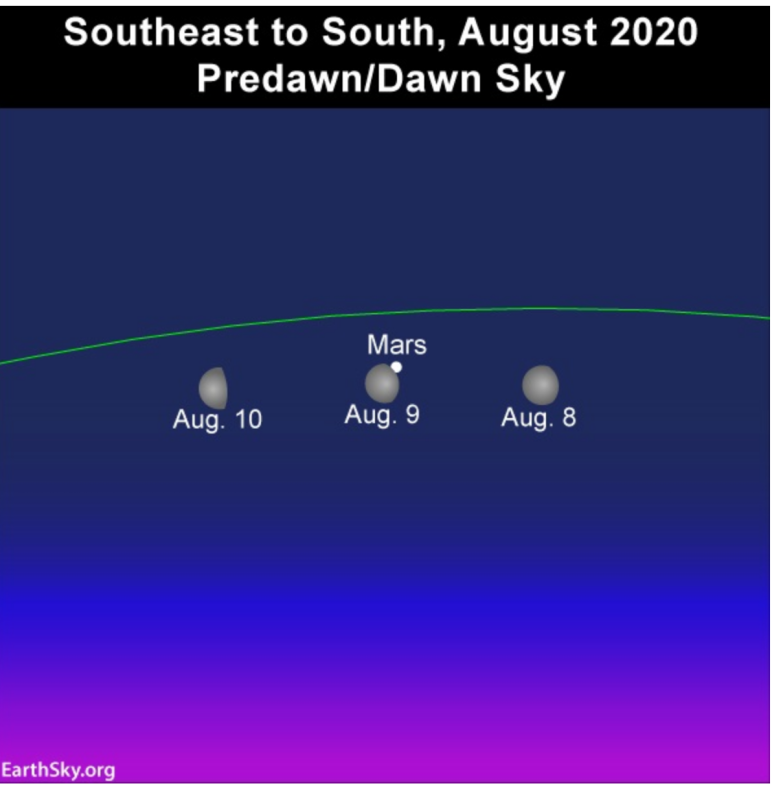
Sunday, Aug. 9: Mercury and Venus before sunrise
If you’ve never seen the solar system smallest planet with the unaided eye, this morning offers a chance. Look just before sunrise in a north-easterly direction, though you may need binoculars to spot this tiny red dot of a world. Be careful not to point your binoculars at the Sun as it rises—that’s very dangerous. Venus should also be very easy to spot above along with bright stars Sirius further east.
Wednesday, Aug. 12 through Saturday, Aug. 22: ‘Galaxy window’ open
The center of our galaxy looks spectacular in August, but only when the Moon is down. So look during the week before Aug, 19’s New Moon, for a few nights after, to get a great view of the galaxy’s center from our position in its Orion Spiral Arm. Look generally south. You’ll also see Jupiter and Saturn on its eastern side.
Wednesday, Aug. 12 and Thursday, Aug. 13:
Milky Way, Perseids peak and Venus
You will see the Milky Way arc across the night sky before midnight and then witness the peak of the Perseid meteor shower.
It’s the year’s most popular display of “shooting stars” mostly because it occurs when people in the northern hemisphere are often outdoors a lot and camping. It peaks after midnight when shooting stars are possible, though this year that’s when a 35%-lit Moon will rise, which will bleach the night sky somewhat. However, you should be able to glimpse the brighter of the estimated 60 shooting stars per hour.
Stay up late enough and you’ll also see a very bright planet Venus appear in the northeast—tonight it will be at its greatest separation west from the Sun.
Stories Posted This Week
Monday, September 21, 2026
Sunday, September 20, 2026
- Charmaine M. Spradlin, 74, worked for Associated Plastics
- Bulldog boys soccer win vs. Old Fort
- How Dillinger robbed a Bluffton bank
- Ada School Board recap: School fees waiver estimate is $57K, intervention and after-school program report
- Ada Barnyard Farmers results from 2026 Hardin County Junior Fair
- Rodeheffer awarded Choice One Engineering scholarship
Saturday, September 19, 2026
- Bulldog golf 3rd at final BVC tourney, 2nd overall
- Bulldog football win vs. Perry
- N. Main St. arrest and drug seizure on August 18
- Christian Nationalism poses problems for American democracy
- Weekend Doctor: When should you see an endocrinologist?
- Letter: Background regarding public meeting on data center moratorium
Friday, September 18, 2026
Thursday, September 17, 2026
- Bluffton Icon headlines, September 17
- Bulldog girls soccer 0-0 tie vs. Riverdale
- Bulldog boys soccer loss vs. Riverdale
- Roundhead poet publishes third book
- Bulldog volleyball wins in four vs. Riverdale
- Sept. 15 Ada Council: Impact of big ticket pool repair, public urination ban goes into effect
- Hall named 2026 OMLA Regional Administrative Assistant of the Year
- Play Bingo with Officer Penny at the Ada Public Library
- Adult Book Group books available at APL
- Ada Schools exceed state standards on 2025-2026 Ohio Report Card
- Oct. 6 ONU Trike-A-Thon will raise funds for St. Jude's
- Antibiotic resistance: More to learn