Columnist Bill Herr taught high school mathematics and science for 32 years before serving as a volunteer and then as a staff chaplain at two nursing homes.
By Bill Herr
There was one group of residents in the nursing home that had something in common–the veterans. Each had a story to tell. Here are three stories they told me.
Columnist Bill Herr taught high school mathematics and science for 32 years before serving as a volunteer and then as a staff chaplain at two nursing homes.
By Bill Herr
I always said there are four things that determine who we are and who we are becoming. They are the people we’ve known and loved, the experiences we have had, the suffering we have known, and the spiritual growth that is taking place in us. As chaplain I was always responsible for the last one, helping with worship services, leading Bible studies and visiting with residents and praying for them.
Columnist Bill Herr taught high school mathematics and science for 32 years before serving as a volunteer and then as a staff chaplain at two nursing homes.
By Bill Herr
This article is written especially for preachers. I’m certain that one responsibility of a pastor is to bring spiritual nourishment to every member of the congregation. Providing this means the pastor is responsible not only to those that attend worship services, but also to church members that are not able to leave their homes due to aging or health issues, and also to members residing in elderly care institutions.
Columnist Bill Herr taught high school mathematics and science for 32 years before serving as a volunteer and then as a staff chaplain at two nursing homes. In this series of articles, he writes about his experiences with elderly residents. He does not use the residents’ real names.
By Bill Herr
Early in my time as chaplain I went into the room of a new lady resident. I did not know that she had dementia. As soon as she saw me, she began cursing me. I tried to introduce myself but she continued cursing. After a few uncomfortable moments, I excused myself and left the room.
In the following days, I observed that her husband visited her every day. She would sit up and he would sit beside her and gently massage the back of her neck and shoulders. One day I entered her room and she was crying softly. I asked her what was the matter and she said, “I miss my husband.” I asked her if I could pray for her. She nodded and I prayed specifically that her husband would soon be there to see her. When I finished I looked at the doorway and there stood her husband. He had just arrived.
Columnist Bill Herr taught high school mathematics and science for 32 years before serving as a volunteer and then as a staff chaplain at two nursing homes. In this series of articles, he writes about his experiences with elderly residents. He does not use the residents’ real names.
By Bill Herr
Some of the kindest acts I have ever witnessed occurred when residents in nursing homes did acts of love and kindness toward fellow residents. One example was an exchange between Harry and Jim.
The 19th amendment guaranteed all American women the right to vote on Aug. 1920.
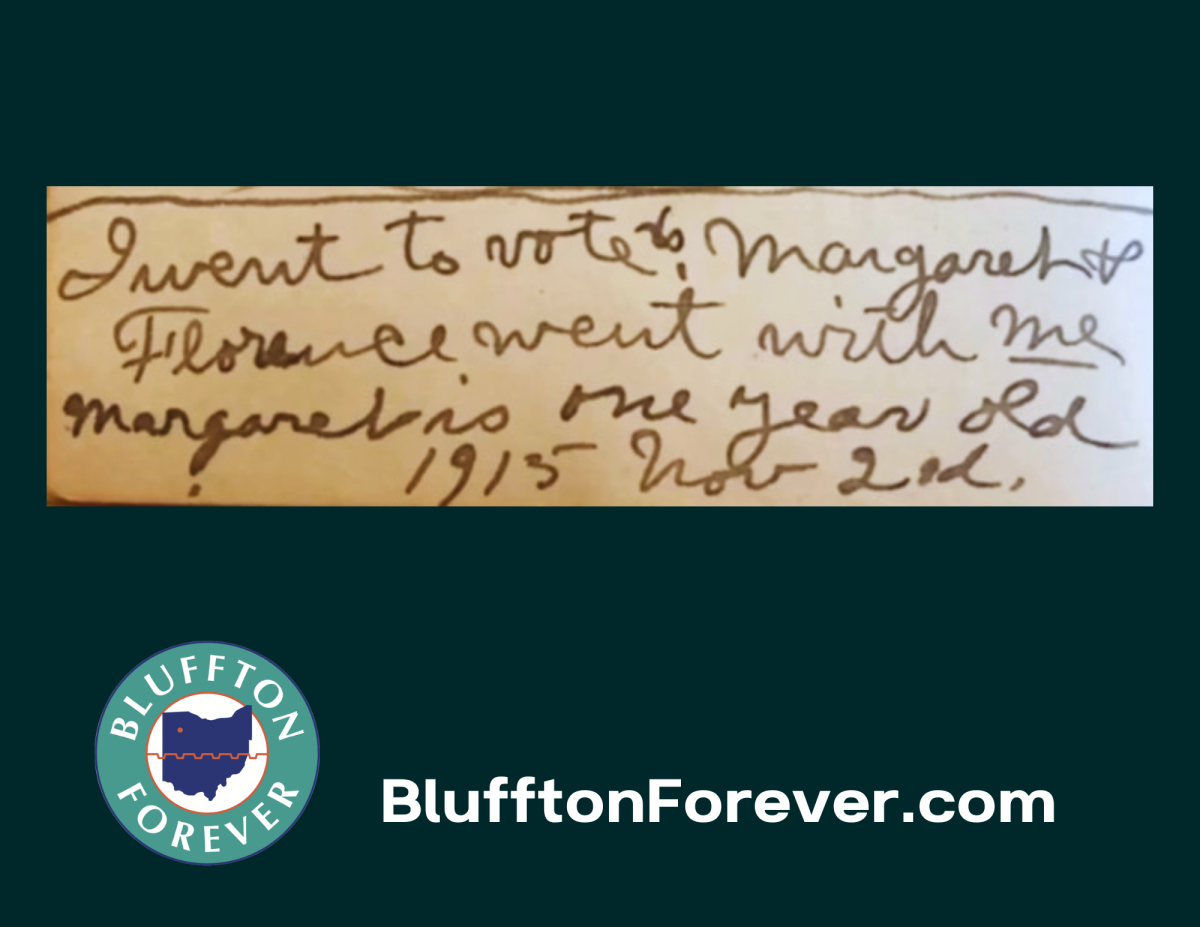
Despite that date, a brief notation in my grandmother’s diary reads: “I went to vote and Margaret and Florence went with me. Margaret is one year old, Nov. 2, 1915.”
The note with the 1915 date confused me. I knew that women did not receive their constitutional right to vote until the 19th Amendment to the U.S. Constitution was ratified.