























The road to dedicating Alger's Ray Brown Memorial Park

The May 14 dedication ceremony to be attended by Gov. Mike DeWine at the Ray Brown Memorial Park, 1014 N Ohio St, Alger, will begin at 2:00 p.m.
By Paula Pyzik Scott
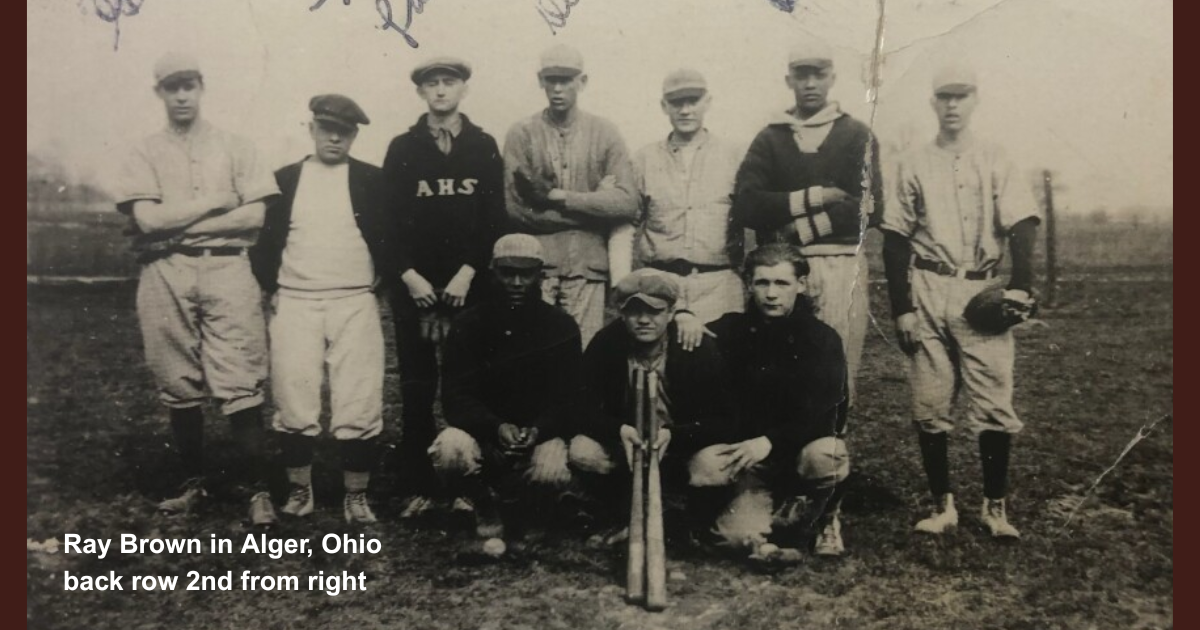
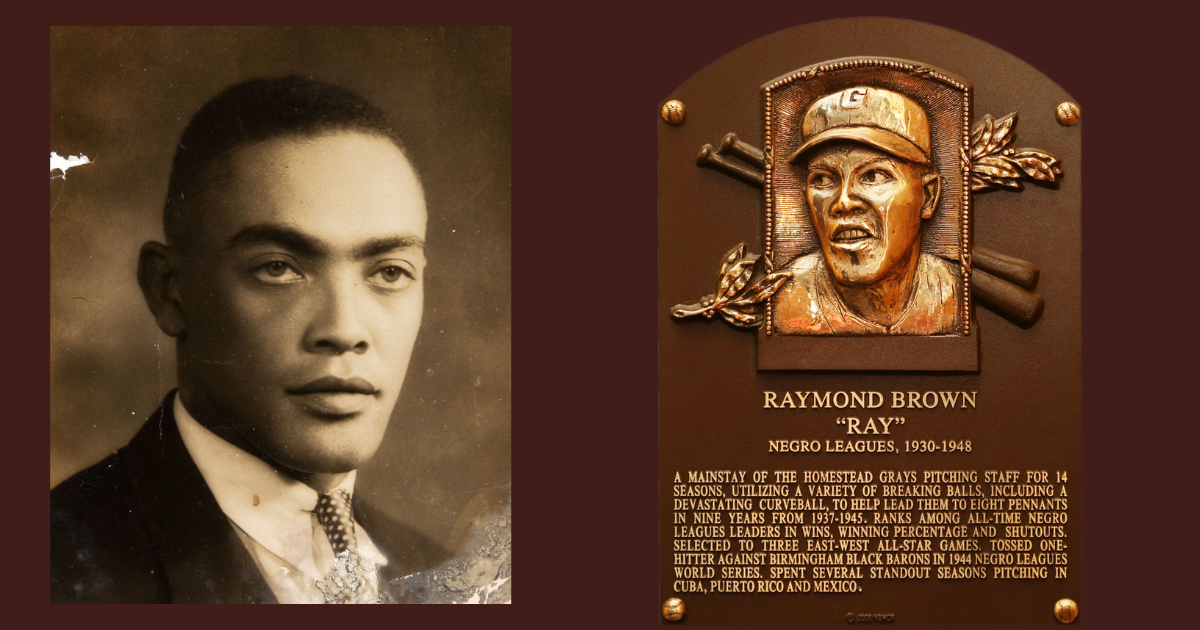
The dedication of Ray Brown Memorial Park in Alger, Ohio, on Thursday, May 14, is a remarkable ending to a long-forgotten story. Only in recent years has it become locally known that Negro League star pitcher and Baseball Hall of Fame honoree Ray Brown was born in the village in 1906.
Brown’s accomplishments and those of other Negro League players were belatedly recognized by the National Baseball Hall of Fame in 2006, when 12 black players and executives were inducted in the Cooperstown, NY, museum.
Brown spent 14 seasons pitching for the Homestead Grays. During one nine-year span, the team won eight Negro National League pennants. He also played in Cuba, Mexico and Canada before retiring after the 1953 season. Brown’s major league stats include 157 games started, 119 wins, 1480 innings pitched, 18 shutouts, 719 strikeouts and an ERA of 3.12.
But how did the ball get rolling to honor Brown with an historical marker, a mural and a park named after him in Alger? A diverse team of community members and historical and arts organizations has worked for several years to reintroduce Ray Brown to Alger, Ohio and the region.
ADA HERALD EDITORIAL
The first person to champion a memorial for Ray Brown was Ada Herald reporter and baseball fan Joe Shriner. Having learned that Brown was an Alger native, he wrote a “rather scathing” editorial in December 2020, suggesting that the village should honor the man who learned to play baseball so very well in their community.
Shriner says he never expected anything to come of the article, but he feels strongly that we need to “honor our local people in all of the different arenas…. People who have really gone the extra mile to excel at something should be honored.”
He also points out that Brown is one of only 354 elected members in the National Baseball Hall of Fame, which celebrates the oldest major professional sports league in the United States and Canada, dating back to 1876.
ONU STUDENTS RAISE FUNDS FOR HISTORICAL MARKER
Shriner’s editorial was read by Ohio Northern University professor and baseball fan Dave Strittmatter, who enlisted his students to create a fundraising campaign for a Ray Brown historical marker. It took almost a year for that group to get the marker approved and to raise the $4,200 needed to purchase it.
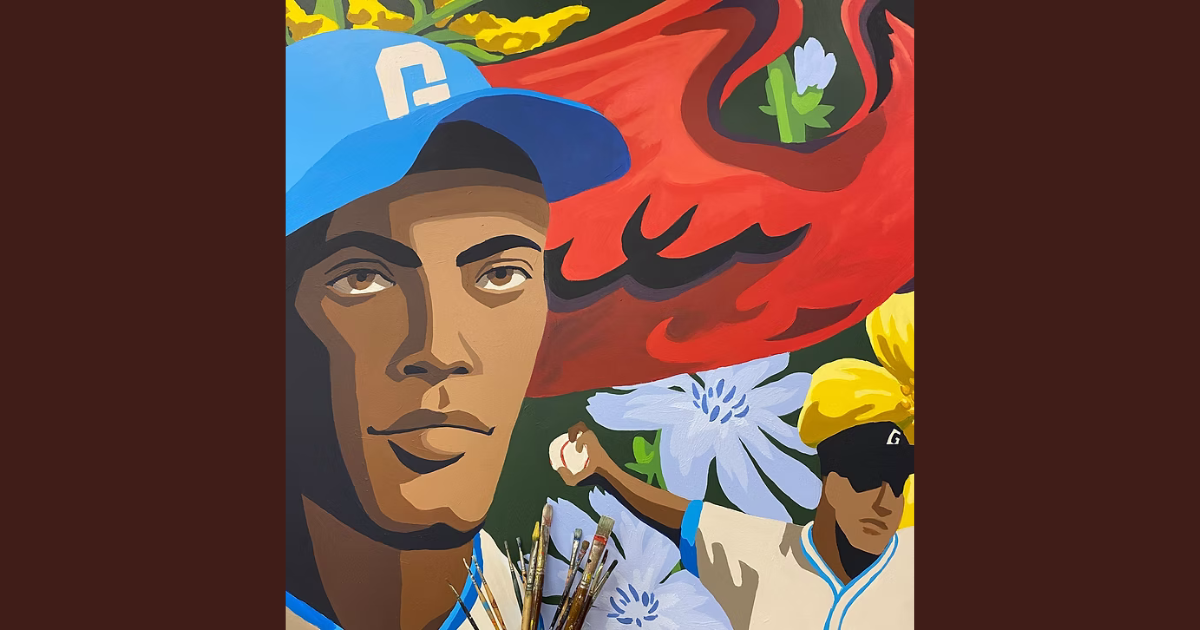
The ONU collaboration expanded in June 2023 to include a mural by student painter Aubrey Davis. The colorful work depicts Brown pitching in his Homestead Grays uniform and as a young boy. A cardinal and native Ohio flowers symbolize his Ohio roots.
It was the summer of 2024, after Strittmatter and Village of Alger Administrator Paul Osborne applied for grants from the Ohio State Legislature, that the project turned a major corner. Searching for funding for items such as fencing, an entrance gate and security cameras, the Hardin County Historical Museums were awarded $40,000.
MIDWEST MEMORY GRANT
In Fall 2024, ONU art professor Melissa Eddings Mancuso found the Midwest Memory Grant, which aligns beautifully with the Ray Brown Memorial Park project, in its purpose of “supporting the expression, elevation, and preservation of diverse stories through monuments and memorials in Midwest communities.” In winter 2025, the Alger project received one of eight $110,00 grants, with $75,000 earmarked for park improvements.
VILLAGE AND COUNTY INVOLVEMENT
That April, the Village of Alger council voted to rename Alger Park for Brown, a move that met with some initial resistance. Many living in Alger and the surrounding area had never heard of Ray Brown or his career in Negro League baseball.
Osborne doesn’t think there was a racial element to the pushback: “some people who have know Alger Park their whole lives were resistant to it.” He calls the project “the greatest thing” and hopes “this park will lure people from all over the United States, that it will be an attraction that will elevate the quality of life in Alger.”
The Village Administrator admits that he’s more of a football fan than a baseball fan, but says that players like Bob Gibson and other Cuban and black baseball players were his heroes. “When I found out a black man from Alger did great things, my heart leaped out of my chest.”
UNCOVERING BROWN’S STORY
But not only was Ray Brown unsung in his birthplace, after his baseball career, he also lived and died in obscurity. Strittmatter reports that at the Negro Leagues Baseball Museum in Kansas City, there are a tiny number of references to Brown. And he notes, Brown was “a star among stars” and as a pitcher was overshadowed by the charismatic Satchel Paige.
Brown was married and divorced twice and had a nonverbal son with disabilities. After retiring from baseball, he worked at the Sunshine Biscuits Company in Dayton, Ohio. Brown died on February 8, 1965 and his remains were buried in an unmarked grave. Following his induction into the MLB Hall of Fame, funds were raised for a gravestone that was dedicated in Greencastle Cemetery in July 2008.
An article by Chris Rainey for the American Society for Baseball Research unearths some details about Brown’s childhood and Alger High School sports career, as well as detailing his baseball career from 1930 to 1953.
The Hardin County Historical Museums in Kenton plans to create a small Ray Brown exhibit and has a web page detailing the scope of the memorial field project.
Perhaps there are more chapters in the Ray Brown story yet to be written, and more discoveries to be made about his life, as more people are introduced to the phenomenal Negro League pitcher who hailed from Alger, Ohio.
EDITOR'S NOTE: Corrections have been made to the original version of this article, thanks to reader feedback.